


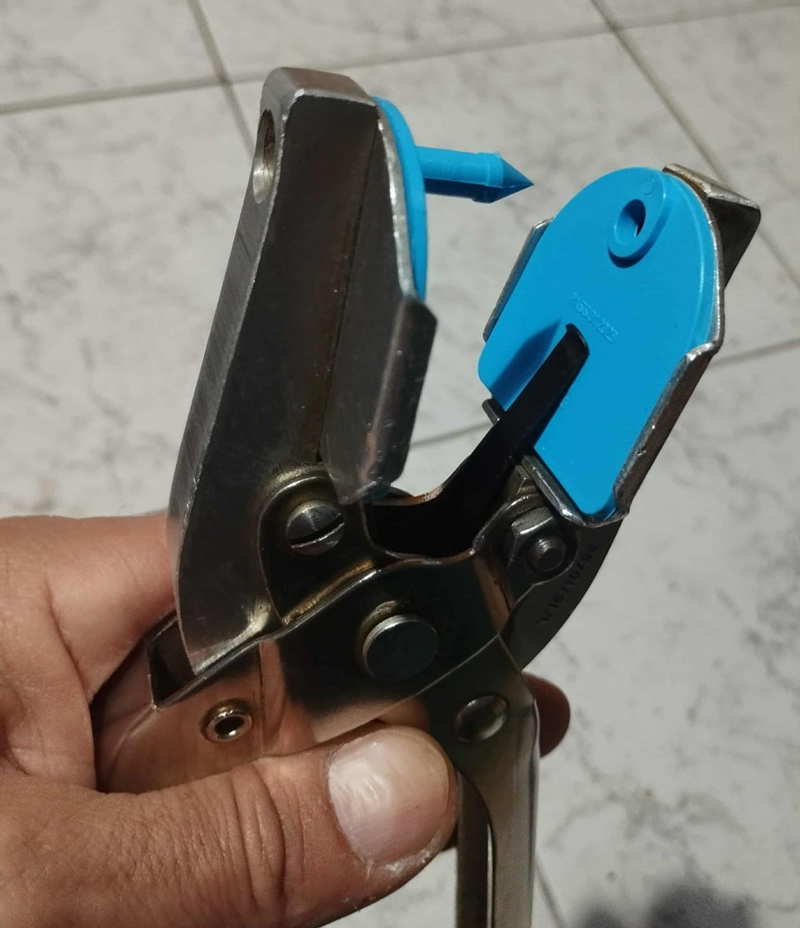
In all types of ear tags, the most basic requirement for successful application is the immobilization of the animal and choosing the right puncture point. In conditions of SUFFERING of the ear tags, whether this comes from the movement of the animals, either from hard tissue points, or a combination of both of these factors, the level of High Pressure in the eardrum increases significantly and consequently the following ”hidden” damage is caused:
 Solid Pin. In this type of ear tags, the movement of the animal and the hard tissue are likely to cause the pin to bend due to High Pressure and the male tag may be damaged without completing the ear tag placement.
 Perforated Pin. The ear tags with perforated pin are the most common type of ear tags. Reason for the supporting pin on the applicator, the ear tag CAN be placed on a hard tissue point and when the animal is moving but due to the increased High Pressure the thin walls of the pin are damaged, resulting in the head of the pin detaching and the label being lost within a reasonable period of time. This is the reason why this particular type of ear tags records high rates of loss even when there is no “visible” stress of tags from increased High Pressure.
To reduce stress on the ear tags, avoid placing them near the base of the ear, consult the length of the applicator to lead you to a safe spot with soft tissue. Also, placing the ear tags on the edges of the ear can cause earwax loss and tearing.
To achieve the above implementation practices and results, It is important for each type of Rigidtag® ear tag and each species of animal to ensure the conditions in the following table.